
Edison & Ford Winter Estates: The Complete Visitor’s Guide to Fort Myers’ Most Famous Attraction
Edison & Ford Winter Estates sits at 2350 McGregor Blvd in Fort Myers and holds the adjoining winter homes of inventor Thomas Edison and automaker Henry Ford. The site opens daily from 9 a.m. to 5:30 p.m., with the last ticket sold at 4:30 p.m. A self-guided tour starts at $28, while a guided tour runs $35 and includes the historic homes, botanical gardens, research laboratory, and museum.
What happens when the man who lit up the modern world becomes best friends with the man who put it on wheels? They buy houses next door to each other in Florida and spend their winters trading ideas over the fence.
That’s exactly what played out on the banks of the Caloosahatchee River more than a century ago, and you can walk through the result today. Edison bought his riverfront property in 1885, and Ford purchased the parcel next door in 1916. The two friends spent winters together testing ideas, and their circle eventually grew to include tire magnate Harvey Firestone, whose partnership helped turn their backyard into one of the most productive research grounds in American history.
The estate has since earned accreditation from the American Alliance of Museums, a distinction held by around 3% of the country’s museums, so you’re getting a visit backed by serious historical rigor rather than a roadside attraction with Edison’s name slapped on it.
Before We Begin…
At Sun Palace Vacation Homes, we offer stunning vacation homes in Fort Myers Beach. Whether you’re looking for a beachfront escape or a cozy retreat, we have the perfect place for you.
We consider ourselves Fort Myers Beach experts and offer comprehensive guides on planning a family trip, planning a romantic getaway, and many more interesting topics on our blog.
Contents
1. A Quick History Before You Go
2. Visitor Information: Hours, Location, and Parking
3. Tickets and Tours: What to Book
4. Group Tours
A Quick History Before You Go
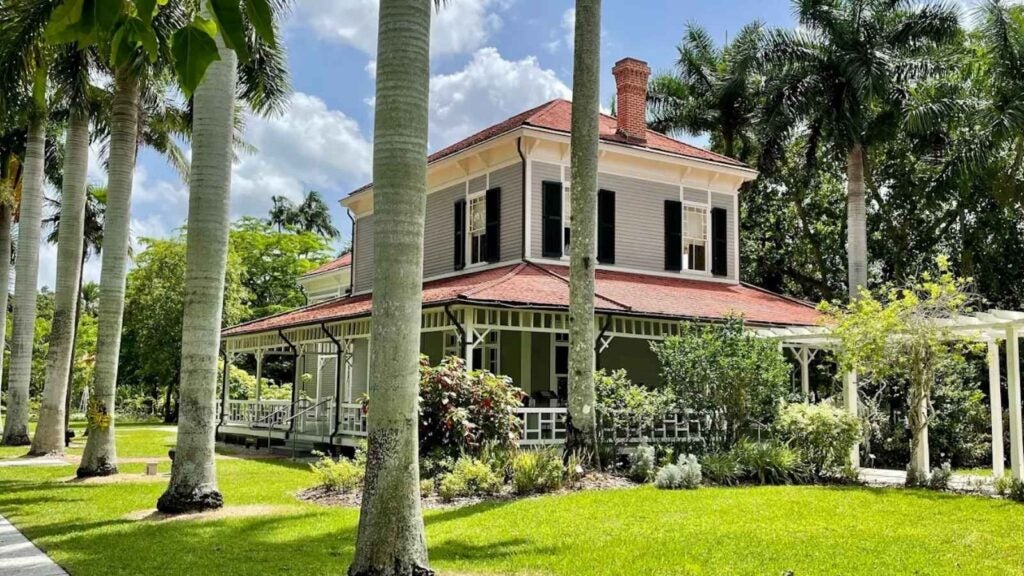
Edison first traveled to Florida in the winter of 1885 with his business partner Ezra Gilliland, working his way down through St. Augustine and Cedar Key before reaching Fort Myers by boat, since no railroad served the area yet. The town won him over almost immediately.
Within a day of seeing the property, he purchased roughly 13 acres along the Caloosahatchee River from cattle rancher Samuel Summerlin for $2,750. He had the houses prefabricated in Maine and shipped down by boat, then assembled on site, and named the finished property Seminole Lodge.
Henry Ford entered the picture through friendship. He and Edison had grown close through their work, and after visiting Fort Myers in 1914, Ford bought the property next door in 1916 so the two families could winter side by side.
He named his home The Mangoes, and the two men spent their Florida seasons walking the grounds together and swapping theories. Their circle later grew to include Harvey Firestone, whose friendship with Ford dated back to 1906 and who became a fixture at the estate as the men’s rubber research took shape.
That backyard research eventually turned serious. In 1927, Edison, Ford, and Firestone founded the Edison Botanic Research Corporation right there on the property, with a mission to find a domestic source of rubber for American industry. The work left behind a laboratory and garden collection that historians still study today, and it’s part of why the estate holds AAM accreditation.
Visitor Information: Hours, Location, and Parking
You’ll find the estate at 2350 McGregor Blvd in Fort Myers, just south of the city’s River District. The site opens seven days a week from 9 a.m. to 5:30 p.m., and the last ticket goes on sale at 4:30 p.m., so plan to arrive well before then. Since the grounds cover more than 20 acres between the homes, gardens, laboratory, and museum, most visitors block out two to three hours for a full visit.
Parking is available on site, and the entrance sits directly along McGregor Blvd, one of the main routes connecting Fort Myers to the beaches and barrier islands, so the estate is an easy stop whether you’re touring downtown or heading toward the water.
If you have questions before your visit, the estate’s staff can be reached directly at 239-334-7419 or through their website’s contact form, and their team can help with mobility accommodations and group scheduling. Building in a little flexibility helps too, since Florida afternoons can bring a passing shower, and the gardens and lab tours are partly outdoors.
Tickets and Tours: What to Book
The estate offers several ways to explore, and picking the right one depends on how much time you have and how deep you want to go into the history.
Self-Guided Tour
This flexible option lets you move through the homes, gardens, museum, and laboratory at your own speed. Admission runs $28 for adults, $20 for teens 13 to 19, and $15 for children 6 to 12, with kids under 5 free and members always admitted at no charge. A free audio guide app covers the grounds in English, German, French, or Spanish.
Guided Tour
A historian-led tour costs $35 for adults, $28 for teens, $20 for children, and $10 for members. It runs about 60 minutes through the homes and gardens, and your ticket still includes full access to the museum and laboratory, so budget around 2.5 hours total. Tours run on a first-come, first-served basis at the ticket counter roughly every 30 to 60 minutes.
Automotive Tour
Offered Mondays at 10:30 a.m., this 90-minute tour focuses on the estate’s antique car collection. Tickets are $40 for adults and go on sale at the counter that morning, so arrive by 9 a.m. for the best shot at a spot.
Inside the Homes Tour
This small-group tour, led by curatorial staff and historians, takes you into rooms normally closed off during standard visits. It’s offered Tuesdays and Thursdays at 10 a.m., costs $50 per adult, and is limited to ages 7 and older. Thursday tours fill fast, so call ahead.
Private and Personalized Tours
Private tours start at a flat rate of $525 for up to 15 people, rising to $700 during peak season from January through March. A personalized option built around specific interests runs $600 for up to 4 guests, with an additional $150 per person up to a maximum of 8. Book at least five days out for a private tour and closer to two weeks for a personalized one.
Group Tours
Groups of 20 or more can book a self-guided tour rate of $24 per adult, but for school groups, it’s $10 per student and $15 per adult, while smaller groups pay a flat rate of $200 for up to 20 students. These group rates run from April through December, with regular pricing applying during the busy January through March season.
Reach out well ahead of your travel dates, since group visits require advance coordination for parking, timing, and guide availability. Calling or emailing the group tours team directly is the fastest way to get a visit on the calendar.
This setup works well for school field trips, homeschool co-ops, scout troops, and tour operators who bring visitors through regularly.
What You’ll See
The Historic Homes
Edison’s home, Seminole Lodge, and Ford’s home, The Mangoes, sit close enough together that you can picture the two men walking between them for their regular visits. Both houses have been preserved with period furniture and original details.
Edison’s home includes the study where he worked through many of his later ideas, and Ford’s place next door reflects the simpler, more understated style he preferred.
The Botanical Gardens
The gardens stretch across more than 20 acres and hold over 1,700 plants representing roughly 400 species pulled from six continents. Edison planted many of these specimens himself as part of his research, so the landscape isn’t just decorative.
The banyan tree near the entrance is one of the largest in the continental United States and was planted in the late 1920s as part of Edison’s ongoing plant collection. The Moonlight Garden, designed by landscape architect Ellen Biddle Shipman in 1929, offers a quieter, more formal space with a reflecting pool, and I found it to be the one spot on the property where I actually slowed down and stopped checking the time.
The Research Laboratory
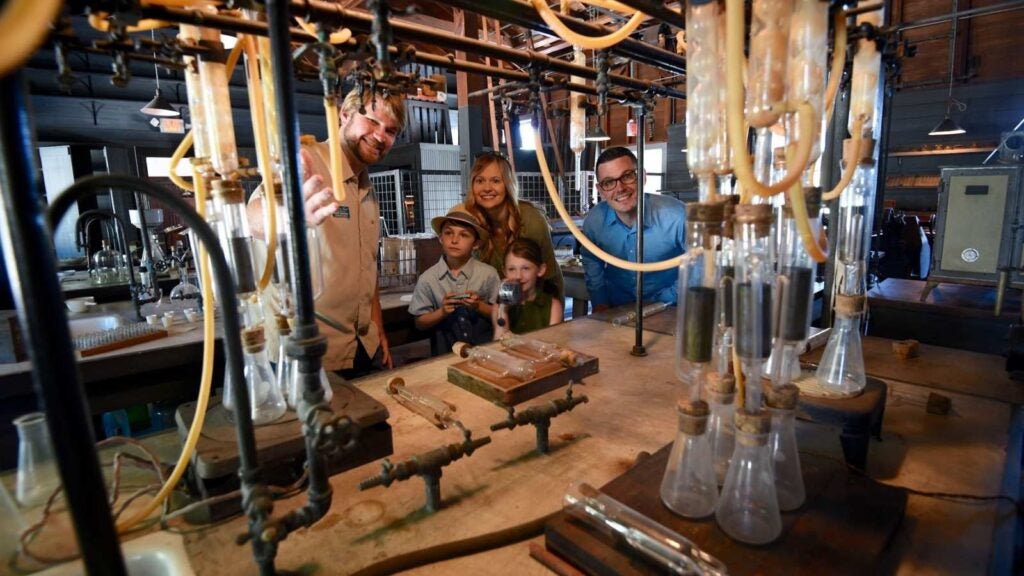
This is where Edison, Ford, and Firestone chased their rubber project in the late 1920s, testing more than 17,000 plant samples in search of a domestic rubber source for American industry.
Their research eventually pointed to goldenrod as a viable candidate, a discovery significant enough that the laboratory earned recognition as a National Historic Chemical Landmark in 2014.
The building still holds original equipment, giving you a clear sense of how much real science happened here.
The Museum
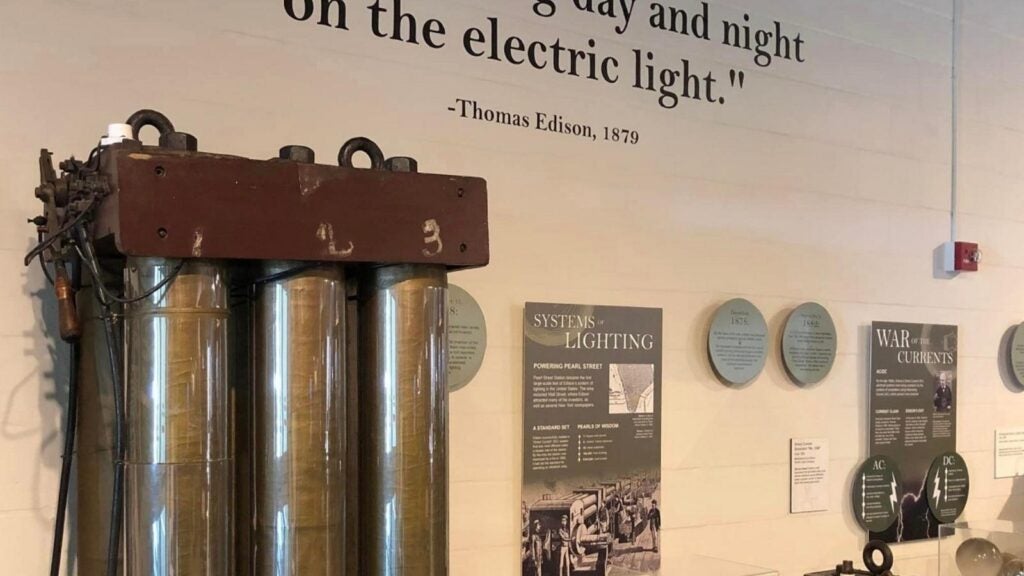
The 15,000-square-foot museum is air-conditioned, a welcome stop during the warmer months. Inside, you’ll find antique automobiles alongside artifacts tied to Edison’s inventions, including early phonographs, lightbulbs, and movie projectors, organized to walk you through the timeline of both men’s careers.
Education Programs
Summer camps give kids hands-on time with the gardens and basic science concepts tied to Edison’s research, while homeschool days and programs built for grades K through 8 bring the estate’s history into structured learning.
School groups can arrange guided field trips, scout troops get their own program rates, and a standing youth robotics program lets students compete through organized leagues, with some teams advancing to world-level championships.
Adults also have access to ongoing classes and lectures on topics like botanical research or the Edison-Ford friendship.
Events at the Estates
Throughout the year, you’ll find garden talks led by horticultural staff, along with seasonal orchid sales that draw plant enthusiasts from across Southwest Florida. These events give you a reason to come back even after your first visit, since the gardens shift with the seasons and the talks rotate topics regularly.
Special programming picks up during the winter months when the estate sees its heaviest visitor traffic, so check the events calendar if you want to time your visit around a specific talk or sale.
Where to Stay Nearby
McGregor Blvd puts the estate within easy reach of Fort Myers Beach and the surrounding barrier islands, which makes it a natural anchor for a longer Southwest Florida trip rather than a rushed afternoon stop. The gardens alone reward a slow morning, and if you time your visit around one of the seasonal orchid sales or a horticultural talk, you’ll have a reason to come back.
At Sun Palace Vacation Homes, we offer well-kept rental properties throughout the Fort Myers Beach area — comfortable, spacious homes that give you a proper base for exploring everything this part of the Gulf Coast has to offer. Browse our listings and plan your visit at the pace it deserves.